Tuesday, July 19, 2016

Japan's Cultural Treasures

Day 12;  May 17, 2016 

This morning we were to take a river boat trip to Senkoji Temple, but it had rained during the night and the water level had risen so we weren't able to take the boat (apparently the oars had to touch the bottom).  So we walked down a path beside the waterway where we were to have gone by boat.  We had to walk 200+ steps up a hill to get to the temple.  The 400 year old Senkoji Temple was once a prayer temple for Emperor Gosaga but was severely damaged by a major pyphoon in 1959. They are struggling financially to rebuild the main hall so the Grand Circle Foundation is funding the rebuild of the handrails and steps on the main approach slope.

At the temple we had a chance to practice Zen meditation and read a chant lead by a Buddhist monk.  We also experienced another aspect of Zen by partaking in a simple Japanese tea ceremony, called sado.  The monk taught us how to creased the beverage by placing powdered tea called matcha in a teacup, covering it with hot water, and whipping it with a bamboo whisk until it foamed slightly.  I didn't really care for it, but, of course, I drink it.


 After the temple visit, we journeyed to Kameoka, a city in the countryside near Kyoto, where we visited Heki-tei, a 300 year old house where a famous samurai once lived.  The house is now owned by the Heki family, whose ancestors were notable property owners in Kameoka.  There we learned to prepare makizushi (rolled sushi) which we ate for lunch along with all sorts of tempura, include chrysanthemums.


Tuesday, June 28, 2016

Japan's Cultural Treasures

May 16, Monday


After breakfast we went a tour to Nara and Fushimi.  The city of Nara was the capital of Japan before Kyoto. We first visited Todaiji Temple, stopping to explore its expansive grounds.  There we met Nara's famous residents -- It's free-roaming deer.  The deer approach you for food and may even bow in their request for food.  You can buy a package of crackers for them for about  ¥150.  I bought the crackers and so many deer approached me that I couldn't hand out the food fast enough and one bit my left index finger drawing blood.  Luckily someone in our group had a small package of neosporin and I have bandages with me.


At Todaiji we also explored Daibutsu-den Hall.  ,The Great Buddha Hall (Daibutsuden) has been rebuilt twice after fire. The current building was finished in 1709, and although immense—57 metres (187 ft) long and 50 metres (160 ft) wide—it is actually 30% smaller than its predecessor. Until 1998, it was the world's largest wooden building.  TheGreat (Vairocana) Buddha is 52' tall, and is made of bronze which was then plated with gold.  The statue was consecrated in 752, but was damaged and repaired several times in the following centuries.


Later we went to Kasuga Shinto Shrine which dates back to 768AD.  We walked along the wooded paths of Kasuga, to admire the many sub-shrines, along with its astonishing collection of 3,000 stone lanterns.


After lunch of tempura and udon, we continued to the lovely town of Fushimi, home of one of Japan's most famous shrines:  Fushsimi-Inari.  The Fushsimi-Inari Shrine was dedicated to the gods of rice and sake in the 8th century, but today it is know for its 10,000 red torii gates, which cover the trails that wind up Mount Inari.


Thursday, June 23, 2016

Japan's Cultural Treasures

Friday, May 13


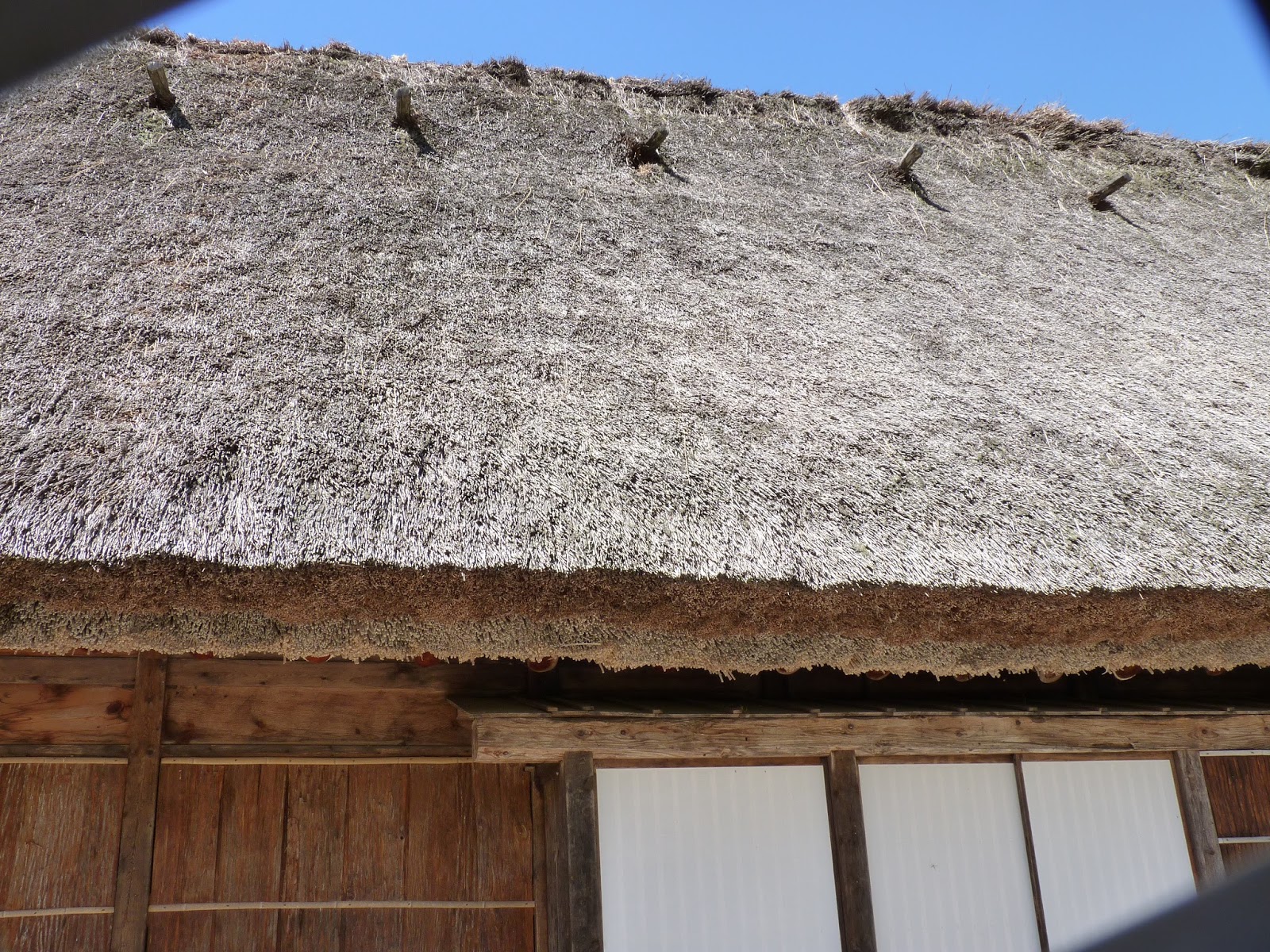
In the morning we took a bus and headed toward Gokayama and Shirakawago.  We first went to Ainokura Gassho Community in the forested countryside outside of Kanazawa.  Because of their relative isolation, these areas developed independently of Japanese society, resulting in a unique culture and lifestyle.  In addition to creating their own dances, festivals, and traditions, residents developed a distinctive architectural style know as gassho, characterized by steeply pitched thatched roofs.  These dwellings are considered to be some of the most efficient farmhouses in Japan. 


Next we went to Shirakawa-go to a building that had been a school but was no longer used for that. We learned the art of mochitsuki, or race-cake making.  Mochi is Japanese rice cake made of short-grain Japanese glutinous rice. The rice is pounded into paste and molded into the desired shape.


Then on to to a workshop in Gokayama to make washi, a thick, fibrous paper made from mulberry bark.


Lunch was a traditional meal with soba noodles and assorted vegetables.  On the way to the restaurant, I spotted this dog in a doorway.


After lunch we headed to Murakami House which was built in 1578 and is the oldest gassho-style house in the area.  During our visit  the head of the family related the history and culture of Gokayama to us as we sat around the open hearth.  We also saw paintings and drawings done by him.


That evening we went to the Gyokusen'inmaru Garden to see it illuminated.  The theme was "Spring - Cherry Blossoms".


Afterward we walked through the main floor of the 21st Century Contemporary Museum.  The museum was closed by then, but we could see some contemporary furniture and a few pieces of art.

Sunday, June 19, 2016

Japan's Cultural Treasures

Sunday, May 15

Among Kyoto's many wonders are some of Japan's most impressive Buddhist Temples and Shinto Shrines.  After breakfast we took a bus tour of Kyoto and then visited the Kiyomuzu Temple,  literally "Pure Water Temple") is one of the most celebrated temples of Japan. It was founded in 780 on the site of the Otowa Waterfall in the wooded hills east of Kyoto, and derives its name from the fall's pure waters. The temple was originally associated with the Hosso sect, one of the oldest schools within Japanese Buddhism, but formed its own Kita Hosso sect in 1965.

Kiyomizudera is best known for its wooden stage that juts out from its main hall, 13 meters above the hillside below. The stage affords visitors a nice view of the numerous cherry and maple trees below that erupt in a sea of color in spring and fall, as well as of the city of Kyoto in the distance. The main hall, which together with the stage was built without the use of nails, houses the temple's primary object of worship, a small statue of the eleven faced, thousand armed Kannon.


Kinkakuji Temple(Golden Pavilion) which is a Zen temple in northern Kyoto whose top two floors are completely covered in gold leaf. Formally known as Rokuonji, the temple was the retirement villa of the shogun Ashikaga Yoshimitsu, and according to his will it became a Zen temple of the Rinzai sect after his death in 1408.

Kinkakuji is an impressive structure built overlooking a large pond, and is the only building left of Yoshimitsu's former retirement complex. It has burned down numerous times throughout its history including twice during the Onin War, a civil war that destroyed much of Kyoto; and once again more recently in 1950 when it was set on fire by a fanatic monk. The present structure was rebuilt in 1955.
The interior of the first floor of the Golden Pavilion

Each floor has a different architectural style
Kinkakuji was built to echo the extravagant Kitayama culture that developed in the wealthy aristocratic circles of Kyoto during Yoshimitsu's times. Each floor represents a different style of architecture.
The first floor is built in the Shinden style used for palace buildings during the Heian Period, and with its natural wood pillars and white plaster walls contrasts yet complements the gilded upper stories of the pavilion. Statues of the Shaka Buddha (historical Buddha) and Yoshimitsu are stored in the first floor. Although it is not possible to enter the pavilion, the statues can be viewed from across the pond if you look closely, as the front windows of the first floor are usually kept open.
The second floor is built in the Bukke style used in samurai residences, and has its exterior completely covered in gold leaf. Inside is a seated Kannon Bodhisattva surrounded by statues of the Four Heavenly Kings; however, the statues are not shown to the public. Finally, the third and uppermost floor is built in the style of a Chinese Zen Hall, is gilded inside and out, and is capped with a golden phoenix.

After viewing Kinkakuji from across the pond, visitors pass by the head priest's former living quarters (hojo) which are known for their painted sliding doors (fusuma), but are not open to the public. The path once again passes by Kinkakuji from behind then leads through the temple's gardens which have retained their original design from Yoshimitsu's days. The gardens hold a few other spots of interest including Anmintaku Pond that is said to never dry up, and statues that people throw coins at for luck.
Continuing through the garden takes you to the Sekkatei Teahouse, added to Kinkakuji during the Edo Period


, before you exit the paid temple area. Outside the exit are souvenir shops, a small tea garden where you can have matcha tea and sweets (500 yen) and Fudo Hall, a small temple hall which houses a statue of Fudo Myoo, one of the Five Wisdom Kings and protector of Buddhism. The statue is said to be carved by Kobo Daishi, one of the most important figures in Japanese religious history.

Japan's Cultural Treasures

Saturday, May 14

Following breakfast, we paired off and Carl and I set off to visit a local family and get a first-hand glimpse of Japanese life at home.  We went to the home of Mr. and Mrs. Mori.  The Mori's have two grown children -- a son and a daughter.  The son has 3 children -- 2 girls and a boy.  The daughter has 1 son.  Japanese children have celebrations at 3, 5, and 7.  They showed us photos of their grandchildren in outfits for those celebrations.  The 3 year old girl was dressed in a bright pink ruffled, elaborate long dress.  The boys were dressed as samurai complete with swords.  In another photo, the oldest grandson is wearing an Under Armor shirt, as Mr. Mori pointed out.  The boy (preteen) is active in athletics.

The daughter had a wedding in Hawaii wearing a strapless white, Western style gown.  They she had a wedding in Japan wearing the traditional white, then red kimonos.  (Akiko later told me that you can rent wedding clothes.)  Mr. and Mrs Mori were married in 1973.


Mr. Mori is a retired junior high principal and baseball coach.  He had a case full of trophies.  Mr. Mori is a Yankees fan.  Now he participates as an amateur actor in Noh theatre.

His wife played the koto (Japanese harp) and sang for us.


Mr and Mrs Mori have been to the East Coast of the U.S. -- in New York they visited the United Nations.


The group then had lunch together.  It was Japanese food with fried fish, vegies, and coffee ice cream.

At the train station I bought two jars of Sake before boarding the train to Kyoto.